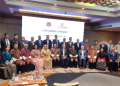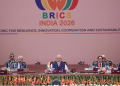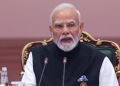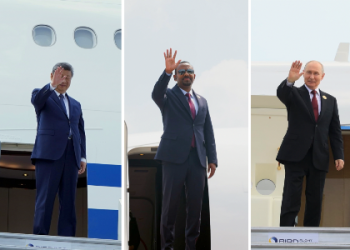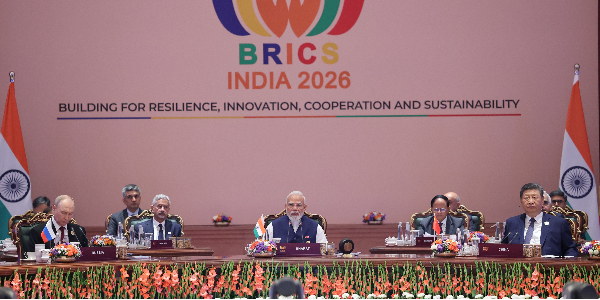
New Delhi: If there was one message that defined the 2026 BRICS Summit in Delhi, it was this: India wants a different global order, but not a new global bloc.

Prime Minister Narendra Modi’s BRICS strategy was built around a delicate proposition—make global institutions more representative, give the Global South a greater voice and reduce vulnerability to economic coercion, without turning BRICS into an anti-Western alliance.
Modi’s assertion that BRICS is “not against anyone” captured the essence of India’s approach.
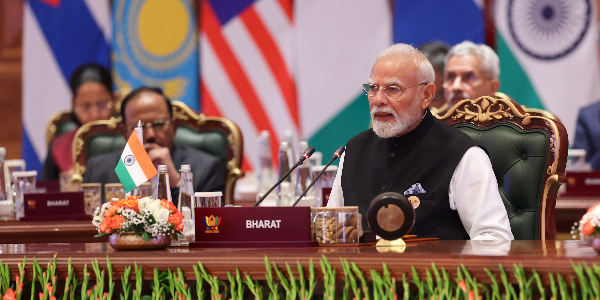
The New Delhi Declaration itself reflected this balancing act. It called for greater representation of emerging and developing economies, reform of global institutions and stronger multilateralism, while emphasising dialogue, diplomacy and practical cooperation. (Public Now)
India’s message: Reform the system, don’t burn it down
New Delhi clearly sees strategic value in BRICS as a platform representing a larger share of the Global South.
But India has shown little appetite for transforming the grouping into an ideological counterweight to the United States and its allies.
There was no dramatic declaration of a common BRICS currency.
Instead, the emphasis was on practical measures such as cross-border payment mechanisms, local-currency settlements, resilient supply chains, digital innovation, health, energy, food security and development cooperation. The declaration specifically acknowledged work on interoperability of payment systems and trade settlements in local currencies while recognising that there is “no one-size-fits-all approach.” (Public Now)
That distinction is important.
India is seeking greater strategic autonomy—not economic isolation.
The New Delhi Declaration: A diplomatic success
Getting the BRICS members to agree on a common declaration was itself a diplomatic achievement.
The summit took place against the backdrop of sharp geopolitical tensions, including the conflict in West Asia. Iran and the UAE—countries with sharply different positions and interests—were both inside the expanded BRICS framework.
Yet the group reached consensus.
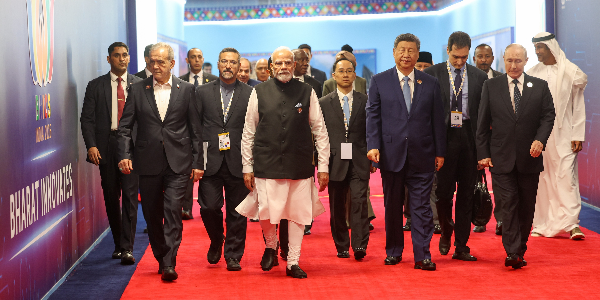
The final declaration called for restraint, dialogue and diplomatic solutions while avoiding language that would make consensus impossible. (Reuters)
This illustrates the paradox at the heart of BRICS.
The grouping is large enough to influence the global conversation—but diverse enough to make common geopolitical action extremely difficult.
Its strength is its diversity.
Its weakness is also its diversity.
Modi-Putin: Strategic autonomy, not bloc politics
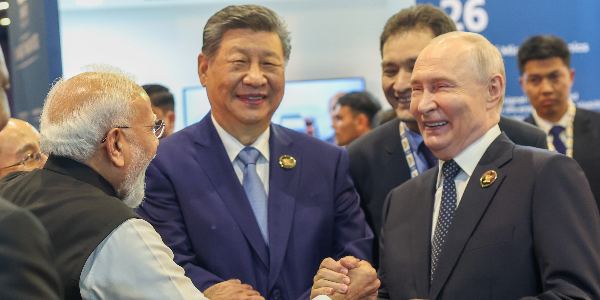
Prime Minister Modi’s meeting with Russian President Vladimir Putin reaffirmed the resilience of the India-Russia relationship.
For New Delhi, Moscow remains important for energy, defence and strategic cooperation, while India is also interested in expanding the relationship into technology, manufacturing and industrial partnerships. (Financial Times)
But India’s engagement with Russia should not be mistaken for alignment with a Russia-China geopolitical bloc.
That is where New Delhi’s BRICS strategy differs fundamentally from a traditional alliance model.
India wants Russia in its strategic equation—but does not want Moscow or Beijing defining that equation.
Modi-Xi: The most consequential conversation
If one bilateral meeting carried particularly high strategic significance, it was the Modi-Xi Jinping meeting.
Xi’s visit to India—his first since 2019—created political space for a cautious improvement in relations after years of tension following the 2020 border clash. (AP News)
The conversation focused on stabilising ties, expanding business and people-to-people exchanges, addressing trade imbalances and improving market access.
But Modi also underlined the fundamental condition for progress: peace and tranquillity along the border and mutual sensitivity.
The message was therefore not a dramatic India-China reset.
It was managed stabilisation.
India and China may compete, cooperate selectively and coexist—but neither side can simply wish away the strategic mistrust between them.
BRICS gives India something more valuable than a bloc
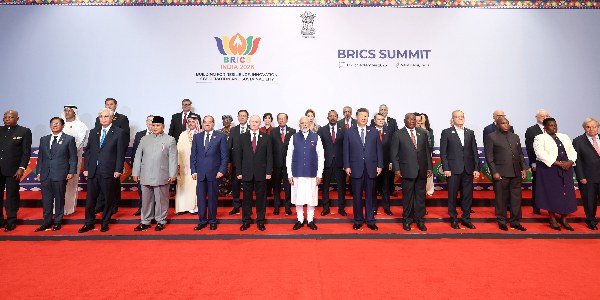
That something is choice.
BRICS allows India to sit across the table with China and Russia while simultaneously maintaining partnerships with the United States, Europe, Japan and Australia.
This is the core of India’s multi-alignment strategy.
New Delhi does not need BRICS to replace the existing global system.
It needs BRICS to ensure that the existing system cannot be monopolised by a handful of powers.
The New Delhi Declaration’s emphasis on greater representation for emerging and developing economies reflects precisely this objective. China and Russia also reiterated support for India and Brazil to play a greater role in the UN, including the Security Council. (Public Now)
India’s biggest BRICS success may be keeping it practical
There is an argument that India’s success in Delhi was not in making BRICS louder—but in making it more functional.
Instead of allowing the summit to become a theatre of anti-Western rhetoric, New Delhi pushed practical cooperation and institutional reform.
That approach may prove more sustainable.
A BRICS that talks about payments, supply chains, technology, development and global governance has greater room to grow than a BRICS defined primarily by opposition to Washington.
India appears to understand that difference better than most.
The real test begins in 2027
The next major test will come under China’s BRICS presidency in 2027.
Beijing is likely to favour a larger and more politically coordinated BRICS and may push further efforts to reduce dependence on Western-dominated financial systems.
India, meanwhile, is likely to support expansion, institutional reform and a stronger Global South voice.
But New Delhi is unlikely to accept the transformation of BRICS into a China-led geopolitical pole.
That will be the central strategic contest inside the grouping.
India is not choosing a camp. It is creating room to manoeuvre.
The Delhi summit demonstrated that India’s BRICS policy is neither anti-Western nor blindly pro-Russian or pro-Chinese.
It is fundamentally India-first strategic autonomy.
New Delhi wants a more representative world order, stronger Global South institutions and greater economic resilience.
But it also wants access to Western technology, markets and capital—and productive relationships with all major centres of power.
That is not contradiction.
That is the strategy.
BRICS matters to India not because it provides a replacement for the existing world order, but because it gives New Delhi additional leverage, partnerships and diplomatic space within an increasingly multipolar world.
India is not choosing sides. India is expanding its options.
#BRICS2026 #BRICSIndia2026 #IndiaBRICSChairship #BRICS #NarendraModi #India #GlobalSouth #StrategicAutonomy #Geopolitics #MultipolarWorld #IndiaChina #IndiaRussia #NewDelhi