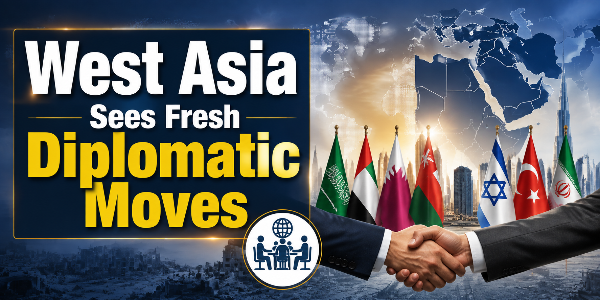
In West Asia, multiple political, military and diplomatic tracks are moving at once, reshaping the region’s crisis landscape.

In Tehran, Iran’s parliament is still reviewing the draft plan to reopen and regulate the Strait of Hormuz. The bill remains in committee, with lawmakers studying a preliminary text that would tighten oversight of foreign vessels and impose new penalties on hostile navies. For now, it is only a draft, and no vote has been scheduled.
Parallel to this, Iran’s negotiations with Oman are close to completion. Officials say both sides have agreed on the coordinates of a new shipping route through the strait, and a joint announcement is in its final drafting stage. The new corridor would replace temporary lanes for several months, though Iran warns that navigation agreements alone cannot guarantee security while tensions with the United States continue.
Across the wider region, a major defence realignment is under way. Turkey, Saudi Arabia and Pakistan signed a trilateral defence pact, a move analysts say could create a powerful Sunni security bloc. The agreement forms a new axis at a moment when Gulf states feel exposed by the ongoing conflict with Iran.
Yemen’s Houthis claimed responsibility for a large-scale missile and drone attack against what they described as Saudi-backed military mobilisations in eastern Yemen on Thursday.
Meanwhile, Russia is stepping up diplomatic engagement. President Vladimir Putin has discussed the Gulf crisis with UAE President Sheikh Mohammed bin Zayed, calling for de‑escalation and stable navigation in the strait. Moscow maintains ties with both Iran and the Gulf, positioning itself as a mediator while protecting its own energy and security interests.
In Washington, President Donald Trump has again promised an early end to the war on Iran. He has rejected reports of shortages in U.S. missile and munitions stockpiles and denied claims of disagreements with Defence Secretary Pete Hegseth. At the same time, Trump is meeting CEOs of major mining companies to secure critical minerals needed to replenish U.S. weapons inventories — a move linked directly to sustaining military production during the conflict.
Diplomacy continues elsewhere. Talks between Israeli and Lebanese officials have ended in Rome. The U.S. State Department called the discussions “fruitful,” but Hezbollah leader Naeem Qassem described them as “humiliating,” underscoring deep divisions over the conflict’s direction.
Together, these developments show a region in flux — with diplomacy, defence alliances, and industrial mobilisation all unfolding at the same time, as West Asia navigates one of its most volatile moments in years.