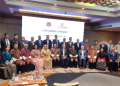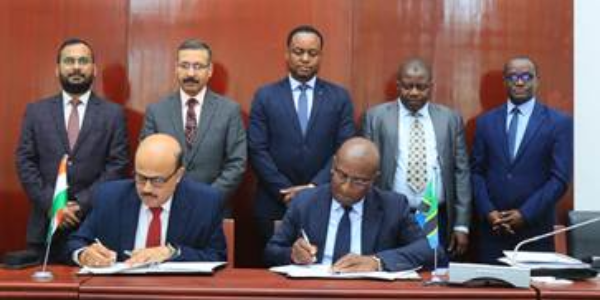
The 5th Session of the India–Tanzania Joint Trade Committee (JTC) was held on 29–30 April 2026 in Dar es Salaam, Tanzania. The meeting was co-chaired by Commerce Secretary, Ministry of Commerce and Industry, Government of India, Rajesh Agrawal, and Permanent Secretary, Ministry of Foreign Affairs and East African Cooperation of the United Republic of Tanzania, Amb. Dr. Samwel William Shelukindo. The session reviewed the progress achieved since the 4th Session held in New Delhi in August 2017 and reaffirmed a shared commitment to further strengthening bilateral trade, investment, and economic cooperation.

The discussions were held in a friendly and positive atmosphere, reflecting the strong and close relations between India and Tanzania. The deliberations highlighted the importance of the JTC as a key institutional mechanism for dialogue on trade and investment issues and for promoting mutually beneficial economic engagement. A comprehensive review of bilateral merchandise trade reflected steady and consistent growth since the 4th JTC held in August 2017 in New Delhi. Bilateral trade reached USD 9.02 billion in 2025–26, rising from USD 8.64 billion in 2024–25.
The discussions covered the promotion of trade settlement in local currencies, facilitation of long-term business visas for Indian businesspersons, strengthening regulatory collaboration in pharmaceuticals and capacity building in areas of health, AYUSH, education and shipbuilding.
Collaboration in mining sector including geological exploration and mining, value addition in the gemstone sector, regulatory developments related to gemstone exports, and opportunities for capacity building and skill development were discussed.
Strengthening cooperation in education and skills development remained a key focus area. The role of IIT Madras Zanzibar as a growing regional hub for higher education in science and technology was highlighted. Enhanced collaboration in MSME sector and to explore new institutional partnerships were emphasised.Areas such as vocational training, industrial research, innovation, and sustainable technologies were identified as promising avenues for cooperation.
Developments in digital cooperation in respect of existing MoU were reviewed, with a focus on digital public infrastructure, including India Stack. Opportunities for collaboration in real-time payments, Digilocker, and digital services were explored. Engagement in e-commerce, including sharing best practices and addressing regulatory challenges, also formed part of the deliberations.
India offered its expertise in shipbuilding and highlighted shipyard development and port infrastructure alongside potential partnerships with Tanzanian institutions.
India’s development cooperation through Lines of Credit exceeding USD 1.1 billion for water infrastructure projects in Tanzania was highlighted. These projects, currently under implementation, are expected to benefit over 6 million people across 24 towns. Continued collaboration in expanding water supply networks and infrastructure development remains a priority area.